



by Ellad Kushnir Matarasso
10 Jun 2025
Ad Personalization with Impact: Fusing Brand Story and Human Understanding
People tend to engage with what feels familiar. When an ad reflects their world - how they speak, what they care about,…

The Alison MCP Server is live: creative intelligence inside your AI workspace.
Connect Your Workspace
by Ellad Kushnir Matarasso
Jul 15, 2025
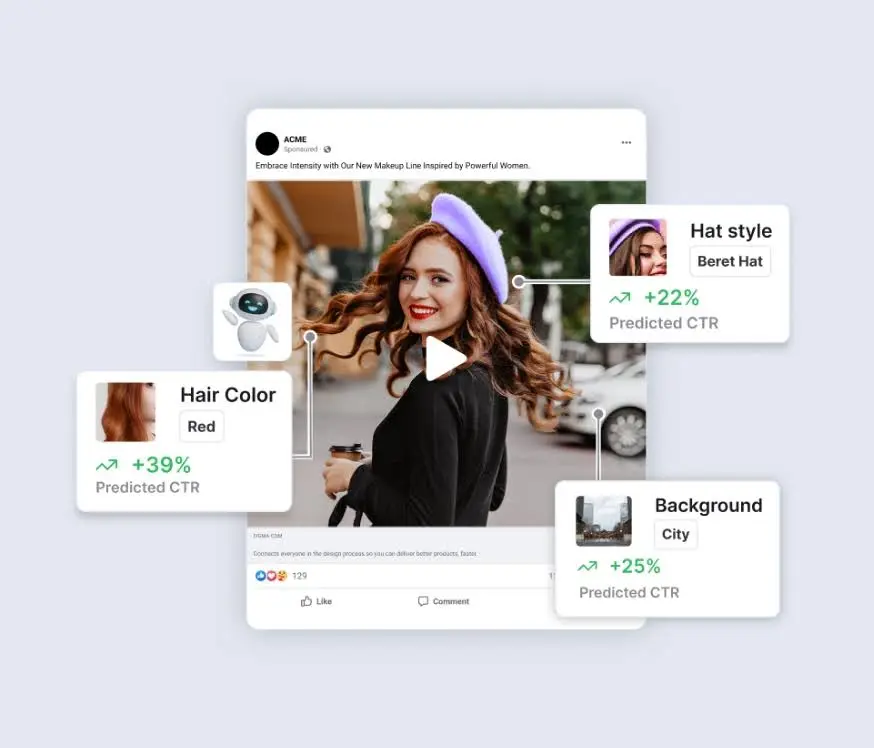
Ads don’t reach their full potential the moment they go live. The most effective campaigns treat each creative as a starting point, something to learn from, refine, and improve over time. This process is known as creative iteration. It’s a structured approach to evolving ads based on real audience behavior. Every version reveals something useful. A headline that grabs attention. A color that draws more clicks. A layout that holds interest longer. These signals guide the next round of creative decisions.
But even strong ideas have a shelf life. Creative fatigue sets in when audiences are exposed to the same message or format too often. What once stood out starts to blend in. Engagement slows. Efficiency drops. Left unaddressed, fatigue can drag down performance across one or more channels.
The fix isn’t always a new campaign. It’s maintaining freshness. Understanding what works or what doesn’t on different ad networks allows for small, strategic updates, new visuals, revised copy, adjusted pacing. These rapid iterations can help extend the impact of a concept and keep it working harder, longer.
This article outlines five strategies to help teams spot fatigue early, iterate with intent, and keep creative output sharp through every cycle.
Every ad is made of parts. Visuals, copy, color, layout, tone, CTA. Each one plays a role in how the audience reacts. But most teams look at the whole creative and guess what worked. To improve performance, you need to break it down. Isolate the pieces. Track them individually. Over time, patterns start to emerge. You see which colors pull attention, which words drive clicks, which layouts convert. This is the foundation of smart iteration.
The goal is to shift from opinion to evidence. Treat each creative like a data set. Tag what you can see. Measure what you can change. Then test small moves instead of big swings. This approach creates clarity, not noise. It helps teams learn faster and move with more focus.
Key variables to track:
Iterations work best when they follow a plan. Random changes create noise. Intentional tests reveal patterns. A hypothesis gives the process structure. It defines what you are changing and why you expect it to matter. Each creative version becomes a small experiment. Instead of asking what performed better, you start asking what specific change made the difference.
This approach makes testing faster, cleaner, and more reliable. It also builds a trail of learnings. Each result points to the next idea. Over time, teams stop repeating old mistakes and start refining what works. Good hypotheses are simple. One change. One expected outcome. One metric to track.
Examples of testable hypotheses:

Every creative goes through a journey. It pulls attention, builds interest, stirs desire, and drives action. When something breaks down, it helps to know where. The AIDA model gives teams a way to diagnose performance. Each stage highlights a different signal. Each signal points to a different fix. Instead of guessing what to change, you focus on where to look.
An ad with strong impressions but low clicks has a different problem than one with clicks but no conversions. One might need a stronger hook. The other might need better alignment with the landing page. Funnel metrics help teams move from symptoms to solutions. They turn vague results into clear direction.
What to track at each stage:
A strong message can carry across many formats. But how it shows up matters. What works in a static ad might fall flat in video. What performs in-feed might struggle in stories. Each environment brings its own rules, habits, and expectations. Iterating across formats reveals how creative elements behave in different spaces. It shows which combinations lift performance and which ones get ignored.
This kind of testing expands reach without starting from scratch. A good idea gets new life when shaped for the right context. Shorten the message. Shift the pacing. Rethink the visuals. Even small format changes can unlock better results.
Ways to rework a creative:
Some creatives outperform others. The question is why. Element-level benchmarking helps answer that. It looks at individual parts across many ads and connects them to results. Over time, this reveals which elements show up in top performers. It builds a map of what tends to work and what doesn’t. That map becomes a guide for new iterations.
This kind of analysis turns creative testing into a learning engine. Instead of treating each ad as isolated, teams start to see shared signals. A pattern in copy. A trend in layout. A style of imagery that keeps showing up in winners. These signals help shape stronger starting points and smarter variations.
Benchmarks to build and track:

At Alison.ai, we believe that a great creative doesn’t come from guesswork. It comes from data, analysis, insight, and iteration. That’s why we built a platform designed to make every version smarter than the last.
Creative teams face a constant challenge: too much data, not enough clarity. Signals get lost across formats and channels. Testing slows down. Patterns slip through the cracks. We solve that by tagging and tracking every creative element, visuals, copy, layout, motion, voiceover, and tying each one to real performance outcomes.
Teams can also stay ahead using our Fatigue Dashboard. It watches for early signs of decline, alerting you when a creative starts to wear out. No more guessing why performance dropped on one platform and soared on another. No more wasting ad spend on tired content. You get clear signals, fast action, and the ability to refresh with intent before results take a hit.
Alison delivers real-time creative analytics and AI-driven recommendations that allows teams to iterate faster and scale in a way that actually works beyond simple optimization.
Book a demo today!
by Ellad Kushnir Matarasso
10 Jun 2025

by Ellad Kushnir Matarasso
22 May 2025