




by Ellad Kushnir Matarasso
24 Jul 2025
The Anatomy of a Winning Creative Analytics Tool
Analytics tools give you all the information available - numbers, views, clicks, and completions - but they only swamp you with data…

The Alison MCP Server is live: creative intelligence inside your AI workspace.
Connect Your Workspace
by Ellad Kushnir Matarasso
Aug 26, 2025

Creatives are everywhere. Scroll any feed, open any app, watch any story, and you see it. The problem isn’t making more creatives. It’s knowing which ones matter. Most teams rely on basic results like clicks or views to judge success. That shows what happened but leaves you blind to why.
Creative analytics changes that. It lets you see the parts of your content that pull people in and the parts they skip past. It turns scattered reactions into a clear picture of what is working. With that clarity, you stop wasting cycles and start building content that connects. As the ad space gets louder, these insights matter more than ever. It’s how you make creative choices with confidence and know your next move is built on more than a hunch.

Most analytics tools were built to track outcomes, not the creative itself. They tell you which ad drove the highest click rate or ROAS, but they stop there. You see the number, not the reason. When you can’t see the elements inside the ad, improving it becomes guesswork.
Attribution models have the same problem. They show where a conversion came from but rarely isolate the role the creative played. Without that clarity, teams treat a creative as a single unit rather than a mix of parts that work together. One strong headline can lift results, while a weak visual drags them down, and you never see why.
This gap leads to stalled optimization. You test new ads, measure broad outcomes, and repeat the cycle without knowing what to fix or keep. Creative analytics fills this space by breaking creative into measurable components and showing what truly drives performance.

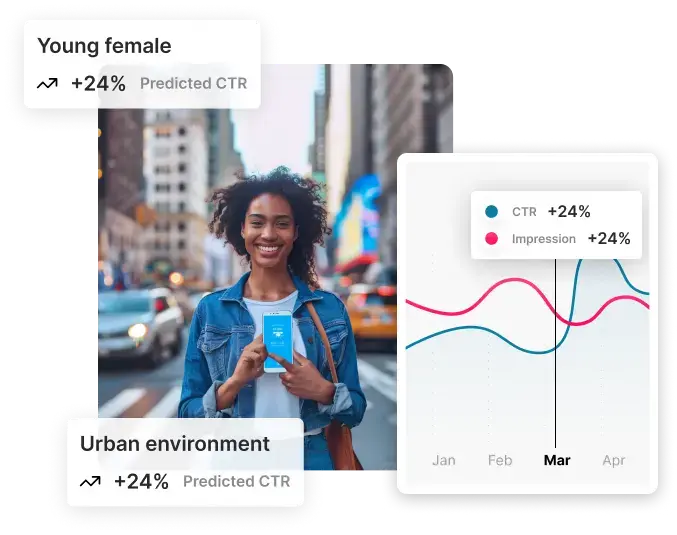
Creative analytics go deeper than video views or engagement rates. It looks inside each ad to show how every piece contributes to the outcome. Instead of judging a video or image as a whole, it examines the copy, color palette, layout, voiceover, CTA, pacing, and so much more. Each element is tagged and tied to performance so you can see what is pulling weight and what is being ignored.
There is also a difference between asset‑level insights and element‑level insights. Asset‑level insights tell you that an ad performed well. Element‑level insights tell you why. You can compare patterns across campaigns, spot trends in headlines or visuals, and understand which creative choices are worth repeating.
Strong creative analytics tools move beyond simple benchmarks. They don’t just show how your content stacks up against others, but how you can improve. This kind of analysis turns creatives from a mystery into a system you can study and refine over time. It gives you direction on what to keep, what to change, and how to evolve ideas into stronger campaigns.
Creative analytics does more than report results. It creates a loop that supports every step of your process. When you begin a campaign, past insights shape the brief. You already know which visuals draw attention and which CTA sparks a response, so your first concepts are sharper.
During production, effort goes to the elements proven to lift performance. At launch, performance signals appear quickly. You can spot early signs of fatigue before results drop and refresh creative while it still has momentum.
Iterations become focused because every change is guided by clear evidence. With cross-platform performance data and competitive intelligence, adjustments build on what works rather than random changes. As patterns emerge, you scale winning combinations across platforms and markets. The flywheel keeps spinning. Each round of insight strengthens the next round of creatives.
This cycle builds momentum. The more you measure, the more you learn. Over time, the process becomes proactive and turns creative analytics into an engine for growth.
For a deeper look at how to structure and streamline creative analytics workflows, see our full guide.

When creative analytics is in place, the benefits show up quickly. Testing cycles get shorter because you see what matters sooner. Instead of waiting for long campaigns to finish, you can react to signals in real time and adjust your approach while the campaign is still live.
Budgets stretch further. You stop spending on ads that fail to connect and put more weight behind the ones that prove effective. Over time this improves ROAS without increasing total investment.
Creative, media, and data teams also start speaking the same language. Everyone can see the same evidence, understand why certain elements work, and align on what to create next. This shared view cuts down on back‑and‑forth and helps the entire team move faster.
The biggest gain is confidence. When you understand why a creative performs, scaling becomes less of a risk. You can take a proven idea, adapt it for different regions or formats, and know it has a strong chance to succeed. Over time, this builds a library of insights that compounds with every campaign you run and becomes even more valuable when supported by a strong creative analytics platform.
Creative analytics turns uncertainty into clarity. It gives you a clear picture of how your content performs and why it resonates. Instead of looking only at final results, you can understand the pieces that make those results possible. This knowledge changes how you plan, produce, and optimize every campaign.
When you know which elements drive attention and action, you can repeat success and avoid costly mistakes. Over time this creates a cycle where every new idea benefits from the lessons of the last one. Your creative process becomes faster, more focused, and better aligned with your goals.
Creatives are no longer a black box. They’re measurable, repeatable, and central to growth. With Alison.ai, you can unlock this potential and see your creative decisions with new clarity. If you want to turn creative insight into action, start by exploring what Alison.ai can reveal about your own content. Book a demo and see how data can transform the way you create.
by Ellad Kushnir Matarasso
24 Jul 2025