The Creative Genome: How Mobile Apps Can Win in the New Era of Marketing

by Eden Baniel
Dec 3, 2025
Last week, our VP Europe, Elad Brindt Shavit, presented at APS Berlin on a shift that every mobile app marketer needs to understand. If you weren’t there, here is the core message.
We are entering a stage where creative has become the most powerful driver of mobile app growth. Targeting options are narrowing, automation is rising, and platforms increasingly rely on creative signals to determine who sees what. In this environment, the brands that win will be those who build creative with clarity, insight, and intelligence, not volume.
This is especially true in the mobile ecosystem, where user attention is short, acquisition costs are volatile, and ads must communicate value instantly.
The Future of Mobile App Growth Is Creative-Led
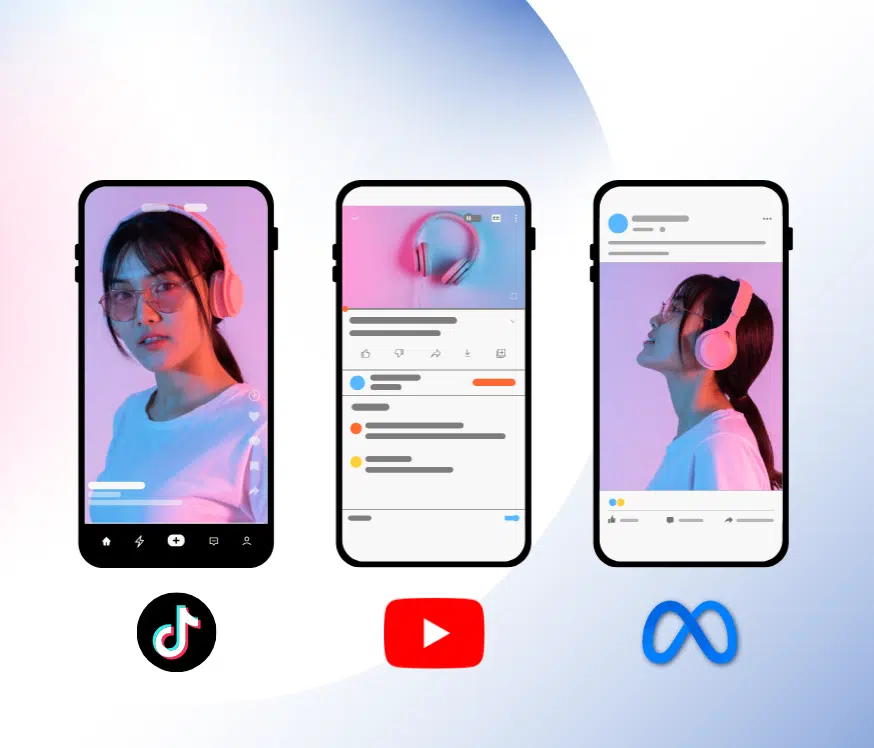
The major platforms that mobile marketers depend on (Meta, TikTok, and Google) are steadily reducing the precision of demographic and keyword-based targeting. As these levers fade, creative becomes the primary signal that feeds the algorithm.
For mobile apps, this shift is significant. App marketers rely heavily on performance predictability, controlled acquisition costs, and rapid iteration.

But today:
- Content creation is easier than ever, yet difficult to steer strategically
- App teams launch hundreds of assets, but lack clarity into which elements truly matter
- Creative and UA teams often work separately, slowing the feedback loop
- Most tests never reach statistical significance, leaving teams with little insight
This creates a widening gap between how much creative is produced and how much is understood.
Mobile apps cannot afford this gap. Their success depends on creative that performs immediately, scales efficiently, and adapts across platforms, goals, and funnel stages.

What High-Performing App Teams Need Now
Clarity
Strong mobile app creative begins with strong alignment. Clear briefs, defined messaging, a shared value proposition, and a precise understanding of the desired action are essential. For apps, clarity directly impacts install quality, conversion rates, and early retention.
Data
Creative data still lags behind media data for many teams. Without specific insight into which hooks, messages, colors, structures, and character choices drive CPI or ROAS improvements, teams waste spend and lose learning cycles.
Intelligence
Testing ten variations of the wrong idea does not lead to improvement. Mobile app teams need intelligence that helps them know what to test and why. This transforms creative iteration into a strategic process rather than a volume exercise.
The Creative Genome for Mobile Apps
At Alison.ai, we decode what we call the “Creative Genome”. It represents the underlying structure inside every creative asset that determines how users respond and how platforms rank and distribute it. For mobile apps, this is the difference between rising above the noise or getting lost inside it.

Our approach follows five core steps:
1. Break creative into its core elements
Every mobile ad contains hundreds of signals that shape performance: colors, transitions, pacing, scenes, UI moments, characters, value propositions, product demonstrations, audio cues, and more. Treating the creative as one unit hides these signals. Breaking it down reveals them.
2. Connect each element to real performance metrics
We map creative DNA directly to key app metrics like CPI, CPA, ROAS, CTR, IPM, and retention signals. This shows which combinations consistently drive results for acquisition, re-engagement, and monetization.
3. Predict what will work next
With patterns established, teams can forecast performance before producing new assets. For mobile apps, this means understanding which creative structures will likely lower CPI, which messages will attract a higher-quality user, and which visual patterns align best with platform behavior.
4. Benchmark the category
Mobile categories move quickly. Understanding how competitors communicate value, demonstrate features, or use creators helps app teams adjust their creative strategy with context rather than assumptions.
5. Create with intelligence
Once insights inform production, everything becomes faster and more accurate. Creative teams work with clear direction, media teams gain consistent performance, and leadership gains predictability. For mobile apps where speed matters, this is a competitive advantage on its own.
Why It Matters for App Marketers Right Now
Only a small share of marketers say their creative and media teams collaborate seamlessly. Yet the mobile ecosystem rewards brands that align early and iterate intentionally.
When mobile creative is built with clarity and intelligence:
- Iteration cycles shrink
- CPIs stabilize
- Channel mix becomes more predictable
- Creative fatigue slows down
- Performance improves across UA and retargeting
The brands that rise will be the ones who understand not just what their creative looks like, but why it works.
The Takeaway
Mobile app growth is shifting toward precision, insight, and creative intelligence. The Creative Genome gives app marketers a systematic way to understand how their content performs and how to consistently produce stronger, smarter creative.
Want to explore how this applies to your own app? Schedule a demo and see Alison.ai in action.