




by Ellad Kushnir Matarasso
20 Mar 2025
AI at SXSW: From Hype to Heartfelt Connections
What made SXSW feel different this year? We noticed a shift in how AI was being talked about. A transformation beyond generalized…

The Alison MCP Server is live: creative intelligence inside your AI workspace.
Connect Your Workspace
by Ellad Kushnir Matarasso
May 28, 2025

MAU Vegas 2025 brought together a vibrant mix of mobile leaders, growth experts, and product innovators—all focused on navigating a rapidly evolving ecosystem. Across three packed days, the event spotlighted new approaches to acquisition, retention, and monetization, with a clear shift toward faster iteration, AI-driven insights, and tighter alignment between product and marketing. Rather than centering on one breakout trend, MAU emphasized a collection of actionable strategies that are already reshaping how mobile teams operate.
In “The Creative Code: Cracking Attention in a Crowded Market,” Matej Lančarič explored how performance improves when ads reflect what users will actually encounter inside the product. The emphasis wasn’t just on matching design aesthetics, but on aligning messaging with the specific reasons people engage with the app in the first place.
For example, when apps highlight common user-selected goals during onboarding, such as improving focus, building habits, or reaching health milestones, and carry those same themes into acquisition campaigns, the resulting creative is more grounded and intuitive. Teams found that users who clicked on these value-aligned messages were more likely to stay, convert, and return. Campaigns performed best when they mirrored real use cases instead of leaning on generic value propositions or surface-level emotional triggers.
Key takeaways:
In “Best Practices for Driving Growth with AI” presented by Andrey Kazakov and Avi Blumenstein of Adjust, speakers emphasized how tighter integration between product and marketing can improve not just creative production, but overall campaign effectiveness. Rather than relying on gut instinct or legacy personas, teams are beginning their messaging strategy with actual in-app behavioral data, what features users return to, where they drop off, and what drives early traction.
When creative teams have access to these insights, their output becomes more relevant from the first impression. The shift is not only about personalization, but about making sure that what’s promised in a campaign lines up with what people experience post-install. This coherence helps establish trust early in the journey.
Key takeaways:
In the session presented by Tigran Mkrtchyan of CoinStats, visual design was positioned as a critical tool for shaping how users interpret subscription offers. The team explored how lightweight animations and festive visual cues, introduced during a limited-time promotion, shifted user perception of the paywall from a transactional interruption to a moment of brand expression.
By incorporating motion and thematic elements aligned with the seasonal campaign, the revised presentation drew more attention to the offer without relying on deep discounts or new pricing tiers. These small but intentional design choices helped hold attention and create a sense of occasion. The result: a more approachable conversion moment that drove measurable improvements across key performance indicators, particularly on Android.
Key takeaways:
In “The State of Subscription Apps Game Show” hosted by David Barnard of RevenueCat, data-backed comparisons between subscription models revealed meaningful shifts in how users respond to offer framing. One strategy that performed well involved leading with a long-term plan, such as an annual subscription, while allowing for an alternative entry point via a shorter commitment period.
This pricing approach let teams anchor perceived value around extended access while still accommodating users who needed a lower-friction starting point. By offering optional short-term plans without making them the default, apps saw better alignment between user expectations and monetization outcomes.
Key takeaways:

In “Scaling CRM Without Limits: Deezer’s Early Move Into Agentic AI,” Paul Meinshausen of Aampe and Emmanuelle Arrault of Deezer explored how lifecycle communication is evolving from static rule-based sequences into dynamic, system-driven experiences. The shift is less about automation and more about relevance, building systems that react to user behavior in real time, without manual logic trees.
Instead of pushing messages based on predetermined milestones, the approach focuses on adaptive lifecycle flows that adjust to each user’s in-app actions. For Deezer, this included transitioning from rigid campaign schedules to CRM that is powered by behavioral signals, letting the user’s own journey determine when, how, and even if messages are delivered. The result was better engagement, less fatigue, and a system that continues to improve over time.
Key takeaways:
In their session, Adjust expanded the conversation to include how AI signals now shape user engagement across acquisition, re-engagement, and retention. Rather than relying on static segmentation, teams are shifting toward signal-based orchestration, where marketing triggers are tied to live behavior patterns.
This means that when users abandon flows, show signs of hesitation, or interact with unexpected content, AI can adjust messaging in real time across email, push, or in-app channels. These systems are not just more flexible, they’re better aligned with how users naturally behave, which reduces churn and supports more efficient spend.
Key takeaways:
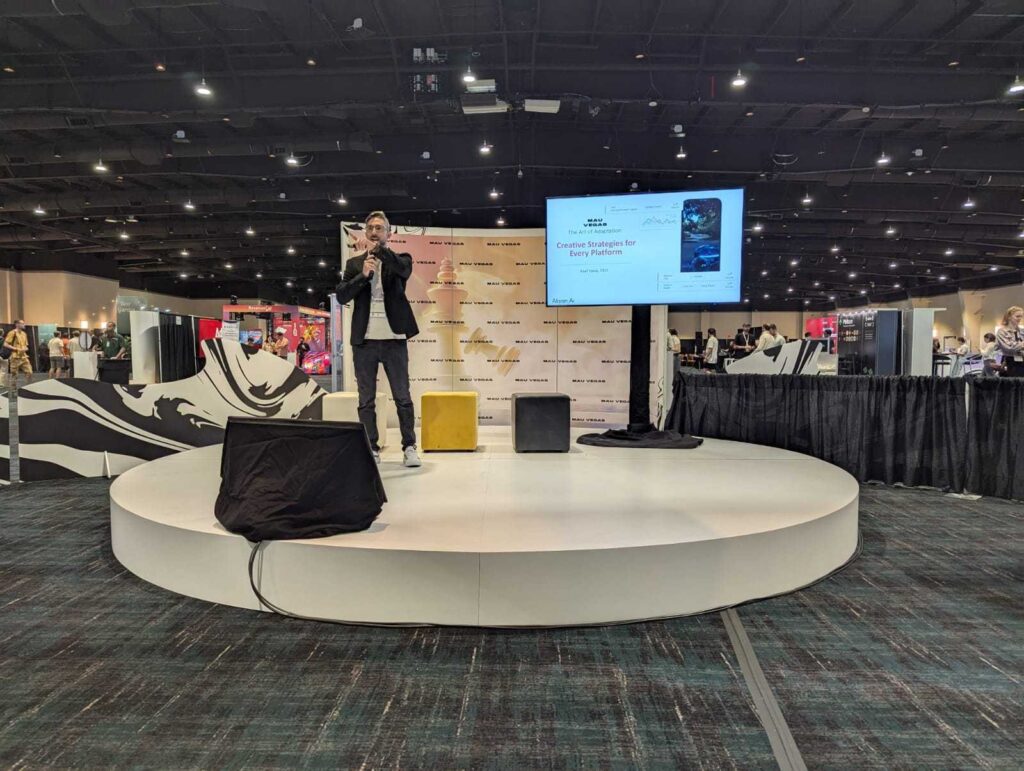
In the session “The Art of Adaptation: Creative Strategies for Every Platform,” presented by our CEO, Asaf Yanai, the focus was on how data is the most valuable asset advertisers have. Asaf explored how breaking creative down into its tiniest elements – text, layout, sound, etc. – can help teams understand exactly how each component affects performance. The idea is that one-size-fits-all creative is no longer effective. Instead, the session showcased how each platform has unique preferences and best practices, and how advertisers must adapt accordingly to drive results.
The presentation outlined a practical framework for leveraging platform-specific data to guide creative strategy. By deeply understanding how each platform reacts to specific creative elements, teams can test more intelligently, iterate faster, and make informed decisions that lead to stronger media performance. The outcome is a scalable, data-driven creative workflow built to match the speed and complexity of modern growth goals.
Key takeaways:
MAU Vegas 2025 made one thing clear: the future of mobile growth lies in tighter alignment between product, marketing, and creative – driven by data, powered by AI, and refined through iteration. Whether it’s optimizing creative, refining subscription strategies, or scaling lifecycle comms, the key is learning fast and adapting even faster. The sessions underscored how success now depends on leveraging real user behavior to shape messaging, design, and timing across the funnel. Teams that embrace rapid testing and platform-specific insights will be the ones to lead the next wave of growth.
Curious how Alison.Ai can help you put these insights into action? Book a demo today.